Text Size
safe2choose

Types of In-Clinic Abortion

In-clinic abortions are medical procedures used to end a pregnancy or to manage a miscarriage. They are sometimes called surgical abortion or procedural abortion, and may also be referred to by the specific method used, such as aspiration abortion. There are different types of in-clinic abortion methods, depending on how far along the pregnancy is. This page explains each type of procedure and what to expect.

ALL YOU NEED TO KNOW

What is An In-Clinic Abortion?

An in-clinic abortion is a medical procedure that uses instruments or suction to end a pregnancy or manage a miscarriage. It is performed by trained healthcare providers in a clinic or hospital setting.

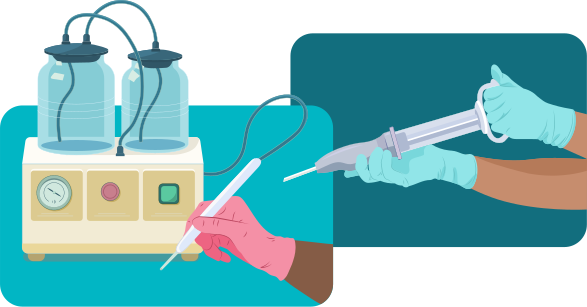
Medical setup with suction instruments and electric devices representing in-clinic abortion by trained healthcare providers.

An in-clinic abortion is a medical procedure performed by trained healthcare providers in a clinic or hospital setting. These procedures are generally safe and around 99% effective, though safety and experience can vary depending on the specific method used and how far along the pregnancy is.

In-clinic methods work by using medications or medical techniques to gradually open the cervix (called dilation). Once the cervix is open, the pregnancy is removed from the uterus using suction, surgical instruments, or by inducing contractions to complete the expulsion.

Some procedures are quick and done on an outpatient basis, while others may require the person to stay in the clinic or hospital for monitoring and recovery, especially in later stages of pregnancy.

What are the Different Methods of In-Clinic Abortion?

View and Download

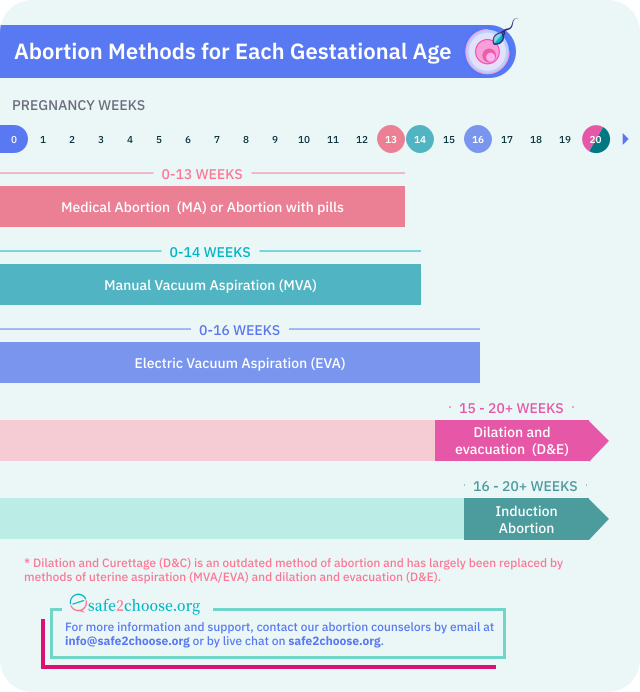
There are several safe methods of in-clinic abortion that you can choose from, and it mostly depends on the gestational age of your pregnancy. Because there is some overlap in the gestational ages for different methods of abortion, the decision may also be based on geographic location, availability of equipment, and provider and personal preference.

•  Manual Vacuum Aspiration (MVA) is a form of uterine aspiration, and is typically used up to 14 weeks gestation

•  Electric Vacuum Aspiration (EVA) is a form of uterine aspiration, and is often used up to 16 weeks gestation

•  Dilation and evacuation (D&E) methods are commonly used beyond 14 weeks gestation

•  Induction abortion, when used, is typically done for pregnancies beyond 16 weeks gestation

•  Dilation and Curettage (D&C) is an outdated method of abortion and has largely been replaced by methods of uterine vacuum aspiration and dilation and evacuation (D&E).

View and Download our infographic on abortion methods for each gestational age.

Stylized blue suction medical instrument representing Manual Vacuum Aspiration (MVA), a safe abortion method for pregnancies up to 14 weeks.

What is Manual Vacuum Aspiration (MVA) Abortion ?

Manual vacuum aspiration (MVA) is a very safe method of abortion for pregnancies in the first trimester, and/or early second trimester all the way up to 14 weeks of gestation. The gestational age limit for MVA often depends on the clinic, as well as the healthcare provider performing the procedure.
Teal electric device on light blue background, symbolizing Electric Vacuum Aspiration (EVA) abortion method.

What is an Electric Vacuum Aspiration (EVA) Abortion ?

Electric Vacuum Aspiration (EVA) is a safe and very similar method to Manual Vacuum Aspiration (MVA). EVA can be used for pregnancies in the first trimester, and/or early second trimester up to 16 weeks of gestation. EVA is performed by a trained provider in a clinic.
Medical instruments on a light blue background, representing the Dilation and Evacuation (D&E) second-trimester abortion method.

What is Dilation and Evacuation (D&E) Abortion ?

Dilation and Evacuation (D&E) is one of the most commonly used methods for second-trimester abortion (between 13 and 24 weeks of gestation). This procedure is typically completed in a clinic or hospital by a qualified healthcare professional and usually lasts between 10 and 30 minutes. Most people can go home the same day and recover quickly. When performed by experienced providers, D&E is a medically safe in-clinic option to end a pregnancy.
Syringe and medicine vial icon on light blue background, representing induction abortion used in second and third trimester pregnancies.

What Is An Induction Abortion?

An induction abortion is a method that is used during the second or third trimester of pregnancy (typically after 16 weeks or more). Sometimes induction abortion is an option for elective abortion, but more often it is used when there are health concerns for the pregnant person or the fetus which makes pregnancy termination the safest course possible. The indications for this will vary widely depending on geographic location and respective laws and restrictions.
A hidden instrument behind a warning sign in gray, portraying an outdated surgical abortion method, no longer recommended.

What is Dilation and Curettage (D&C) Abortion ?

Outdated
Dilation and curettage (D&C) is an outdated method of surgical abortion that has largely been replaced by vacuum aspiration abortion methods. This method is no longer recommended.

SAFE AND EFFECTIVE

Are In-Clinic Abortions Safe?

In-clinic abortion are safe procedures when performed by trained healthcare providers.

Clinics offering suction or surgical abortion methods should follow medical standards based on national regulations and international guidelines, such as the WHO Abortion Care Guidelines and Ipas Clinical Updates.

These guidelines help ensure safety and quality of care by addressing:

  • Who is qualified to provide abortion services
  • How abortion medications should be stored and used
  • Proper cleaning and maintenance of equipment
  • Safe disposal of medical waste
  • Training, supervision, and evaluation of healthcare staff

People seeking an in-clinic abortion should choose a clinic that uses safe, approved methods and follows up-to-date medical guidance to protect their health and well-being.

RISKS AND WARNING SIGNS

What are the Potential Risks and Complications for In-Clinic Abortion?

When performed by trained health professionals in an approved facility and access to right equipment, in-clinic abortions are very safe and have low risk of complications. For example, Vacuum aspiration is effective and safe, with success rates over 98%-99% and major complication rates under 1%.

However, there are still some risks to the different procedures, as in any medical practice. These include heavy bleeding, infection, injury to the uterus and surrounding structures, incomplete abortion or retained product of conception, continued pregnancy, and death.

Most complications are not life-threatening and can be treated. This is why monitoring warning signs after an abortion is important.

If you experience any of the following signs or symptoms, you should seek medical attention immediately:

  • heavy bleeding (completely soaking two pads, per hour, for two hours in a row or more);

  • a fever (of more than 38°C or 100.4F) for more than 24 hours after the procedure;

  • severe, worsening pelvic pain; and

  • continued signs of pregnancy (increasing nausea, breast tenderness, etc).

COMMON SIDE EFFECTS

What are the Side Effects of In-Clinic Abortion?

Most people feel strong cramping and experience bleeding during an in-clinic abortion, especially while the cervix is being opened (dilated) and during the procedure itself. This cramping usually gets better soon after the abortion is done, but it’s also normal to have some cramping and bleeding for a few days or even weeks. If misoprostol is used to help open the cervix, it may cause side effects like nausea, vomiting, diarrhea, fever, or chills.

Local anesthesia is often used to numb the area around the cervix. This helps make the procedure more comfortable and ease some of the pain.

It’s also completely normal to feel a range of emotions afterward. Some people feel relief, others may feel sadness, or a mix of both. If you need support or someone to talk to, it’s always okay to reach out for help.

PAIN MANAGEMENT OPTIONS

Is In-Clinic Abortion Painful?

Doctor in white coat explains inhaler to patient in floral dress, symbolizing ,[object Object], during abortion procedures.

Most people feel some pain and cramping during vacuum or surgical abortion procedures. The most common type of pain is strong cramping during the procedure. For many, the cramping gets better quickly afterward, but some people may have cramps on and off for a few days or even weeks. This pain usually happens because the cervix (the opening to the uterus) is being opened and the uterus is contracting.

How much pain someone feels can depend on how far along the pregnancy is, their personal pain tolerance, whether they’ve given birth before, if they usually have painful periods, and how anxious they feel. Everyone experiences pain differently.

Pain management options should always be offered. You can get medicine before or during the procedure, and take it home to use later if needed.

What Type of Anesthesia Is Used in In-clinic abortions?

There are different types of anesthesia that may be used for in-clinic abortion, and which method is used will often depend on the gestational age of the pregnancy, as well as the availability of anesthetic agents in the clinic.

Possible anesthesia methods include:

Local anesthetic:

This is the most common type of anesthetic used for in-clinic abortion. It is a numbing medicine injected next to the cervix to help ease discomfort during the procedure. The person remains awake and fully alert.

Moderate/Conscious sedation:

This is an anesthetic administered directly into a vein, and it slightly decreases the consciousness level of the person. They will respond to verbal commands.

Deep sedation:

This is an anesthetic administered directly into a vein, and it significantly decreases the consciousness level of the person. They will respond only to repeated verbal commands or tactile stimulation.

General anesthesia:

This may use a combination of inhaled or injected anesthetic agents, and it renders the person unconscious. They will not respond to any commands.

POSTABORTION CARE

Post Abortion Care and Contraception After an In-Clinic Abortion

After an in-clinic abortion, it's often offered a follow-up visit, and while this is not required, each person should listen to the recommendation of their health-care provider.

There is no medically proven amount of time that a person has to wait to do specific activities including: shower/bathing, exercise, sex, or using tampons. Generally, it is advised that at least until the bleeding lightens after the procedure, the person should: avoid introducing objects into the vagina including tampons and menstrual cups, and avoid intense physical activity. Each person can return to their normal activities as tolerated, and each person will be different.

Prior to leaving the clinic, you should be offered information about methods of contraception. Most forms of contraception can be started immediately, however, a discussion should take place regarding each person and their choice of method. Clinics should provide people with contact information, in case they have questions or concerns after the abortion.

To find the appropriate contraceptive methods of your choice, visit findmymethod.org

User questioning herself, face resting on hand, question mark above her head

Frequently Asked Questions on Manual Vacuum Aspiration (MVA)

When it comes to ending a pregnancy, safety is super important. Unsafe abortion methods include anything done without proper medical support, approved medications, or trained professionals. These methods can harm your health and even put your life at risk.
Unsafe methods might include:
  • using medicines or substances that are not approved for abortion;
  • taking the right pills but not following the correct instructions;
  • inserting objects into the vagina or uterus;
  • using untrained or unlicensed individuals or facilities for surgical abortions; and
  • having a procedure in a place that’s not clean or medically equipped.
  • Safe abortion methods include:
  • taking approved abortion pills with correct, evidence-based guidance; and
  • having an in-clinic abortion done by a trained professional in a clean, safe environment.
  • Your health and safety matter, always choose trusted methods and sources for care.
    Sources:
    1) "Abortion." WHO, 2024, www.who.int/news-room/fact-sheets/detail/abortion. Accessed July 2025.

    FREE AND SAFE ABORTION COUNSELING

    It is Okay to Ask for Support.

    We offer evidence-based information on safe abortion. Our free counseling service is safe, confidential, convenient, and free of judgement. We are waiting for your message!

    Reach out to safe2choose for more info via our counseling and support channels

    By the safe2choose team and supporting experts at carafem, based on the 2022 Abortion Care Guideline by the WHO, the 2023 Clinical Updates in Reproductive Health by Ipas, and the 2024 Clinical Policy Guidelines for Abortion Care by NAF.

    safe2choose is supported by a Medical Advisory Board formed by leading experts in the field of sexual and reproductive health and rights (SRHR).

    carafem provides convenient and professional abortion care and family planning so people can control the number and spacing of their children.

    Ipas is an international organization focused on expanding access to safe abortion and contraceptive care.

    WHO – the World Health Organization – is a specialized United Nations agency responsible for international public health.

    NAF – the National Abortion Federation – is a professional association in the USA supporting safe, evidence-based abortion care and reproductive rights.

    [1] "Abortion care guideline." World Health Organization, 2022, Retrieved from: srhr.org/abortioncare/.

    [2] Jackson, E. "Clinical Updates in Reproductive Health." Ipas, 2023, www.ipas.org/wp-content/uploads/2023/09/Ipas-Clinical-Updates-in-Reproductive-Health-CURHE23b.pdf Accessed November 2024. Accessed November 2024.

    [3] "Clinical Policy Guidelines." National Abortion Federation, 2024, Retrieved from: prochoice.org/providers/quality-standards/.

    [4] "Clinical practice handbook for quality abortion care". Geneva: World Health Organization; 2023. Licence: CC BY-NC-SA 3.0 IGO. Retrieved from: https://iris.who.int/bitstream/handle/10665/369488/9789240075207-eng.pdf?sequence=1

    [5] Weitz, T. A., Taylor, D., Desai, S., Upadhyay, U. D., Waldman, J., Battistelli, M. F., & Drey, E. A. (2013). Safety of aspiration abortion performed by nurse practitioners, certified nurse midwives, and physician assistants under a California legal waiver. American Journal of Public Health, 103(3), 454-461. Retrieved from: https://www.ncbi.nlm.nih.gov/pmc/articles/PMC3673521/